Dated: Jan 16, 2011
Despite the growing importance of railways, motor vehicles and modern artillery, the armies of the First World War still depended heavily upon horses. The German Army required enormous quantities of food, ammunition, equipment and other supplies to be moved from railheads and depots toward the fighting troops, and horse-drawn wagons remained one of the most practical ways of carrying those loads.
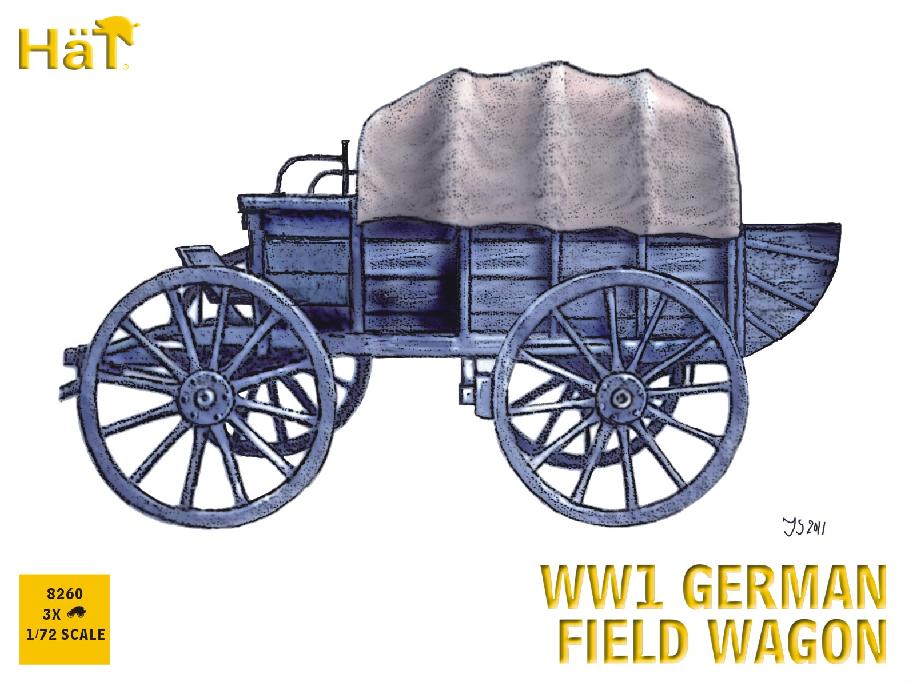
Box
This set represents the German Light Field Wagon 95, a general-purpose military wagon that had been developed before the First World War. It was comparatively light and was normally drawn by two horses, making it suitable for use close behind the fighting units as well as on the roads and supply routes farther to the rear.
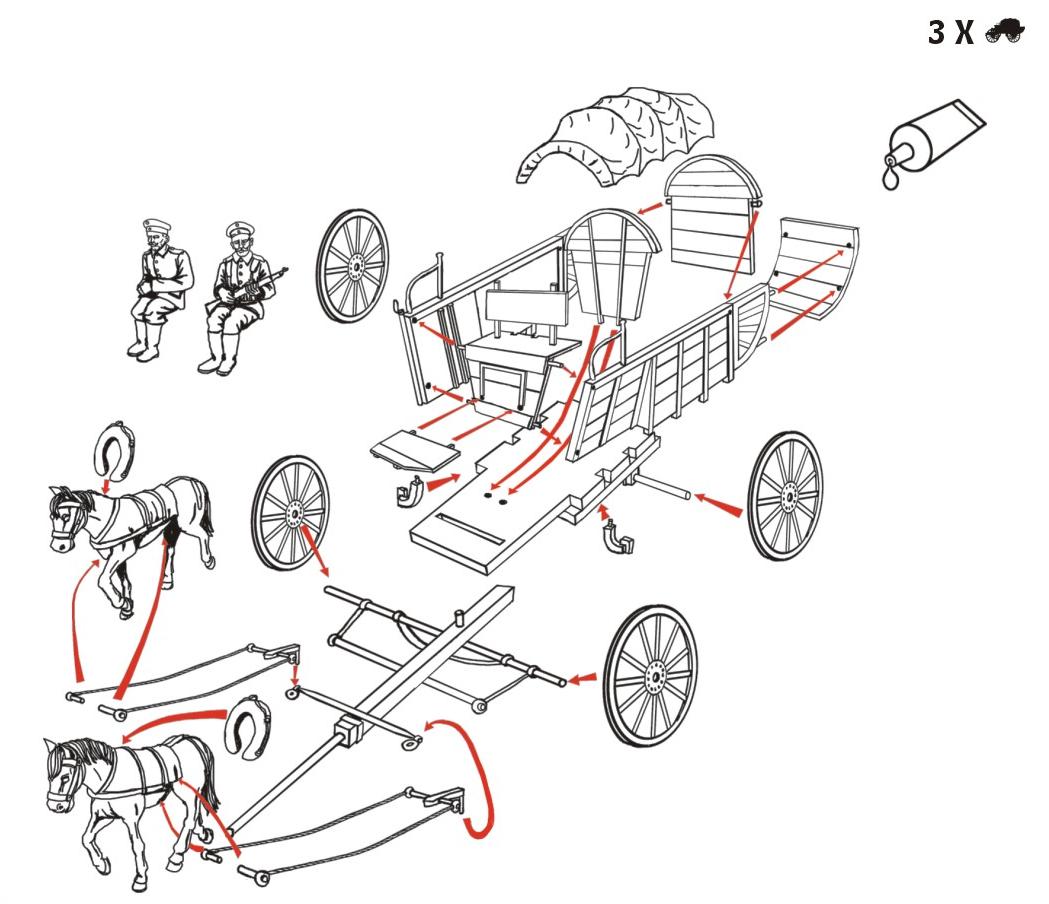
Line drawing
The wagon was designed for versatility rather than one specialized purpose. Versions could carry food, baggage, equipment and military stores, while similar wagons served with infantry companies, headquarters, machine-gun units, engineers and other formations. During the war they could also be adapted to carry ammunition, weapons or even wounded soldiers when more specialized vehicles were unavailable.
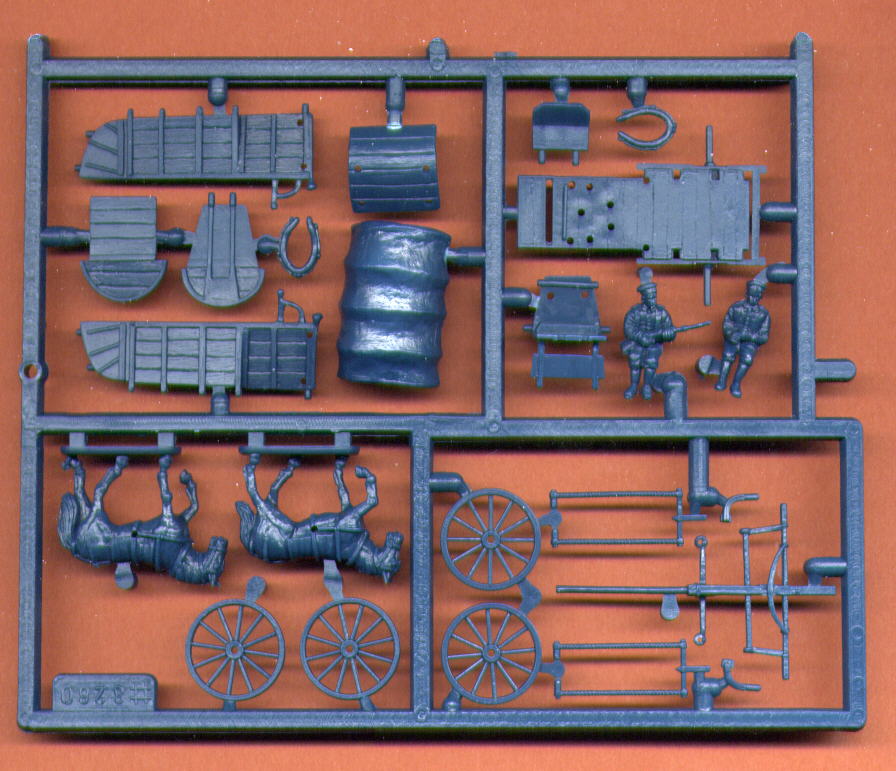
Test shot
Horse transport had several advantages under wartime conditions. Wagons could continue along roads and tracks where motor vehicles might struggle, required no petrol supply and could operate in areas where mechanical transport was scarce. Their limitations were equally obvious: horses required large quantities of food and water, tired quickly under heavy loads and were vulnerable to artillery fire, disease and harsh weather.
As the Western Front became increasingly devastated by shellfire, supplying the front line became especially difficult. Roads were frequently damaged or congested, while deep mud could bring wheeled traffic almost to a halt. Field wagons nevertheless continued carrying ammunition, rations, tools and other necessities toward the trenches, often travelling at night to reduce the danger from enemy observation and artillery.
The same kind of transport was equally important on the Eastern Front, where armies operated across enormous distances and much poorer road networks. Here the ability of horse-drawn vehicles to function without fuel or sophisticated maintenance made them indispensable to German units campaigning in Poland, Russia and the Baltic regions.
This set contains three field wagons, six horses and six crew figures. Each wagon is drawn by a two-horse team and includes a separate canvas cover, allowing the modeller to represent a protected load or vary the appearance of the vehicle. Harness and traces are also provided to connect the horses realistically to the wagon.
Two crewmen are supplied for each wagon, representing the soldiers responsible for driving and accompanying the vehicle. The wagons can be placed in a moving supply column, beside a headquarters or artillery position, or unloading stores behind the front line. Additional crates, barrels, ammunition or other accessories can also be added to represent the wide variety of loads these vehicles carried.
The usefulness of this wagon extended beyond the First World War. The basic design continued to evolve and remained in German military service during the interwar period, eventually contributing to the standardized Hf.1 light field wagon used by the Wehrmacht. The set is therefore especially suitable for the German Army of 1914-1918, but it also represents an important stage in a much longer tradition of military horse transport.
Combined with our WWI German infantry, artillery, machine-gun and other support sets, these wagons add the logistical element that kept an army functioning behind the battlefield. They are particularly useful for supply columns, headquarters scenes, artillery parks and dioramas showing the enormous support system required to sustain the armies of the First World War.
All rights reserved. Any trademark usage or proprietary images on this page are only for the purposes of review or such, and is considered fair dealing and permissible under the Copyright, Design and Patents Act, 1988 (UK). Copyright 2011.